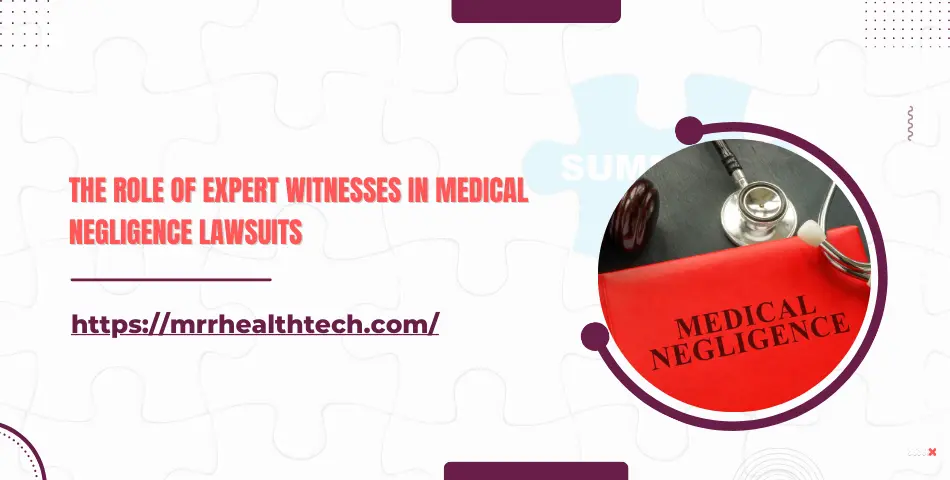
When attorneys are working on a case that involves medical malpractice, the importance of expert witnesses tends to lie in the intersection of intricate medical truths and effective arguments in court. Be it in a medical negligence case study or a learner trying to comprehend recent medical negligence cases in the USA, the ability to wield expert testimony is a skill that can singlehandedly make or break a case.
This is going to serve as a guide for you on Medical Negligence and the subsequent indispensability of an expert as well as the legal complexities stemming from the relevant statutes and precedents within the United States.
What Is Medical Negligence?
Medical Negligence is a form of negligence that occurs when a medical professional fails to as an acceptable medical practitioner would, thus causing injury to the patient. This in the United States falls under medical malpractice and tort law under negligence in law which concerns the legal liability for the negligent omission of care that a reasonably skillful and careful practitioner would provide.
Key Legal Context
- Negligence lawsuit as a whole is almost never criminal negligence in the United States, although the reverse is more commonplace.
- Hall v. Hilbun and other notable medical negligence cases in the United States legal system have been instrumental in defining the legal obligations a physician holds to a patient.
- There is no Negligence statute in Federal law, however, each of the United States has specific laws on malpractice that include the caps on damages as well as other procedural elements.
Examples of Medical Negligence
- Operating on a body part that was not meant to be operated on.
- Missing a diagnosis of a serious illness, for example, a stroke or a cancer.
- Giving incorrect medication or medication of the wrong quantity.
- Lab tests can be ignored or the required diagnostic tests may not be performed.
Such examples of bnegligence lawsuit are often included in expert medical depositions, motions, or even powerpoint presentations for court. Thousands of dollars have been paid in case settlements pertaining to blatant examples of medical negligence in the USA.
Why Are Expert Witnesses Essential in Medical Negligence Cases?
Attorneys rely on expert testimony to:
- Describe difficult medical operations in layman’s terms so that the judge and jury understand.
- Determine the subordinate and negligent action of the required standard.
- Assess the damage and identify the negligent action and the injury.
- Utilize pivotal cases on medical negligence to apply the appropriate legal rules, such as the reasonable physician test.
- Differentiate Medical Negligence from consequences of an operation or procedure that could have been unavoidable.
Recurrent cases of medical negligence cases in the USA have drawn emphasis on the quality of the expert’s testimony as vital for winning the case.
Types of Expert Witnesses in Medical Negligence Lawsuits
- Medical Expert Witnesses: Physicians and specialists of the same branch as the defendant, providing testimony of the accepted standards of care.
- Forensic Experts: In situations when timing, death documentation, or death cause cessation are disputed.
- Economic Experts: Lost wages, future care costs, and various medical negligence payouts.
- Nursing Experts: Particularly adaptable for the evaluation of hospital policy breaches or unlawfully administered nurse patient care.
These forms of expertise help to maintain the legal and factual integrity of your case.
How Medical Negligence Differs from Medical Malpractice
Although the terms are often misconstrued as having the same meaning, each carries a nuanced definition:
- Negligent medicine focuses on the violation of a duty owed and the damages caused by the violation, whether damages are intended or not.
- Medical malpractice carries a more defined legal meaning to it. So proving that a licenced and legally bound individual breach any of their legal obligations is necessary.
Attorneys need to carefully articulate their claims under relevant state laws and case law, due to the fact these variations could vary the level of success achieved.
Challenges with Expert Witness Testimony
- Bias: A partisan and their counsel might challenge the independence of a particular expert.
- Standards of Admissibility: Apply tests such as Daubert, an Federal standard or Frye, which is used in some states to determine if an expert’s reasoning is scientifically bound and is based on evidence.
- Scope and Relevance: Experts are required to remain within their confines of their specialization, and not go beyond generalizations.
- Cost: Testimonies of a specialized expert often entails a high financial cost and high resource investment.
In any medical negligence case, the first step to admissibility and convincing reasoning is proving these assumptions wrong.
Statute of Limitations and Legal Timeframes
Within the United States, most states have a limitation period of about two or three years maximally to file a case for medical negligence starting from either the date of the injury or the date of its discovery.
- Some states have a ‘discovery rule’ whereby time does not begin to run until the patient actually knows of the injury.
- In the case of minors or adults who are mentally incapacitated, timeframes may not apply.
- In supportive procedural activities like the filing of the certificate of merit, the early involvement of expert witnesses becomes very important.
FAQs
1. What is meant by medical negligence?
Medical negligence cases is a situation whereby the health care professional patient relationship is abused, and as such care is not done properly and the patient is harmed, either by an action or omission which is counter to the standard of care expected of the professional.
2. What are the 4 types of negligence?
- Gross Negligence: An extreme case of negligence wherein safety is simply ignored.
- Comparative Negligence: Patient and provider negligence that is not excusable is proportionally attributed to both.
- Contributory Negligence: Negligence on the part of the claimant. in some states, recovery is fully barred .
- Vicarious Negligence: The situation in which an organization is held to answer for the actions of its employees.
3. What are the 4 D’s of medical negligence?
- Duty: There is an established relationship between patient and provider.
- Dereliction: The provider neglects to perform the duty.
- Direct Cause: The neglect causes injury.
- Damages: The appellant sustained physical harm.
Conclusion
In the United States, expert witnesses are indispensable in every case of medical negligence. It does not matter whether you are formulating a case study of medical negligence or handling some of the most notorious cases of medical negligence cases in the USA, the expert’s testimony will either make or break your case.
These experts will assist you in making sure your argument is compliant with the state legal framework, federal regulations, and current standards of care.
If you are an attorney dealing with a medical malpractice case, our legal staff is in the position to help you find and assess the level of qualifications of the witnesses, prepare legally justified statements, and design case winning strategies of litigation.
Get in touch with us as soon as possible to have your case strengthened with necessary medical and legal knowledge and to make the case.