Introduction
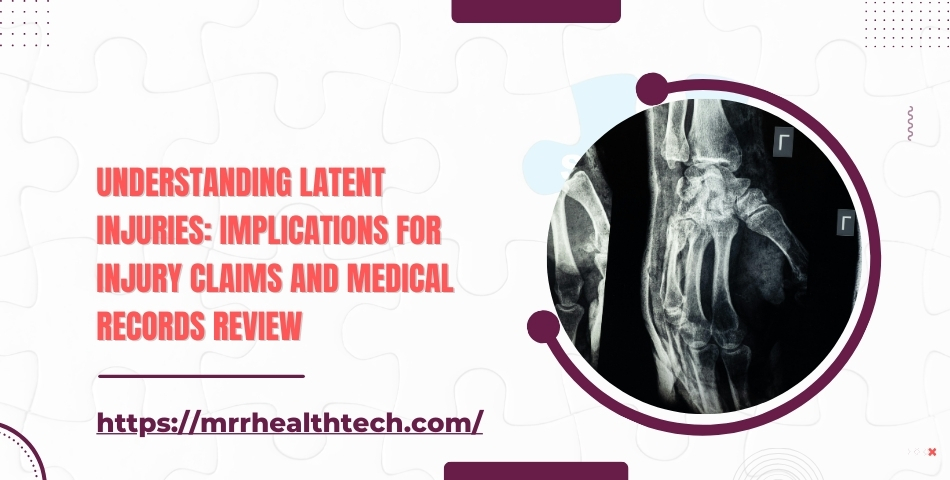
Often, personal injury cases tend to disregard latent injuries, but they have the potential to influence the case significantly. As a medical records Review Company serving attorneys throughout the United States, we appreciate the issues associated with latent injuries and their legal consequences. The purpose of this article is to discuss comprehensively the issues of latent injuries and their legal consequences and to explain how our services help attorneys in managing these issues.
Latent Injuries: Definition and Examples
What Is A Latent Injury?
Definition of Latent Injuries
• Latent Injuries: Symptoms do not immediately appear following an accident, which makes these injuries particularly difficult to diagnose and treat.
Examples of Latent Injuries
Concussions: Symptoms may arise days or even weeks post-injury.
Internal Injuries: Significant damage may go undetected until immense damage has occurred.
Psychological Injuries: Conditions like PTSD often develop years after the trauma occurs.
The Legal Framework Surrounding Latent Injuries
Relevance in Personal Injury Cases
• Statute of Limitations: Assessing the implications of latent injuries within the statute framework is very important. In some regions, the statute is triggered upon discovery of the injury not at the time it occurred.
• Proof Responsibility: There must be an alleged causal relationship between the accident and the latent injury, and this will require legal representation evidence which will be difficult to collect.
Recent Developments in the Law
• Case Law: Newer decisions have established how latent injuries are treated in different regions and this has made process claims more effectively claims.
The Importance of Reviewing Medical Records in Latent Injury Cases
Why Medical Records Are Important
• Documentation of Symptoms: Medical records fulfill the requirement of proving the continuum of symptoms and treatment that developed over time.
• Establishing Causation: A thorough examination and analysis can demonstrate the connection between the latent injury and the accident, which helps the attorney in strengthening their position.
Our Offerings for Lawyers
• Comprehensive Reviews: We assist in gathering relevant medical records by evaluating the documents at hand so as to support the claims of latent injuries.
• Expert Insights: We are able to furnish expert opinions with regard to the medicine of the case which strengthens the advocate’s position.
Incomplete or Inaccurate Records
• Unreliable records present a risk of litigation with gaping holes that suggest gaps in reason that may be harmful to the argument.
• Responding: Implementing stringent gap and inaccuracy verification audit processes.
Common Questions about Latent Injuries
How Do I Know If I Have a Latent Injury?
• Consult a Medical Professional: If any symptoms show up late after an injury, it is crucial to consult a doctor as soon as possible.
What Should I Do If I Suspect a Latent Injury?
• Document Everything: Record each symptom, treatment episode, and interaction with the healthcare personnel separately.
Case Studies
Case Study 1: Overview of a Latent Injury Claim
Overview: A client suffered from extensive headaches and cognitive difficulties several weeks following a vehicle collision.
Challenges: A major challenge in this case was proving the injury’s presence was due to the accident.
Solutions: In this case, the latent injury was simplified because the client had sustained past head injuries that complicated the case but helped explain his symptoms.
Case Study 2: Overview of a Psychological Latent Injury
Overview: A client presented with PTSD out of the blue following a severely traumatic event, though he chose not to access care until many months later.
Challenges: Proving the psychological injury was associated with the incident required substantial corroborating evidence.
Solutions: The documentation we submitted included a strong narrative of the client’s health records, which included therapist notes that documented symptom onset.
Conclusion
While latent injury pose distinct difficulties within personal injury claims, attorneys can successfully argue on behalf of their clients with careful strategy and comprehensive review of medical records. Legal professionals need to grasp the intricacies of latent injuries, and we aim to assist them through these complexities.