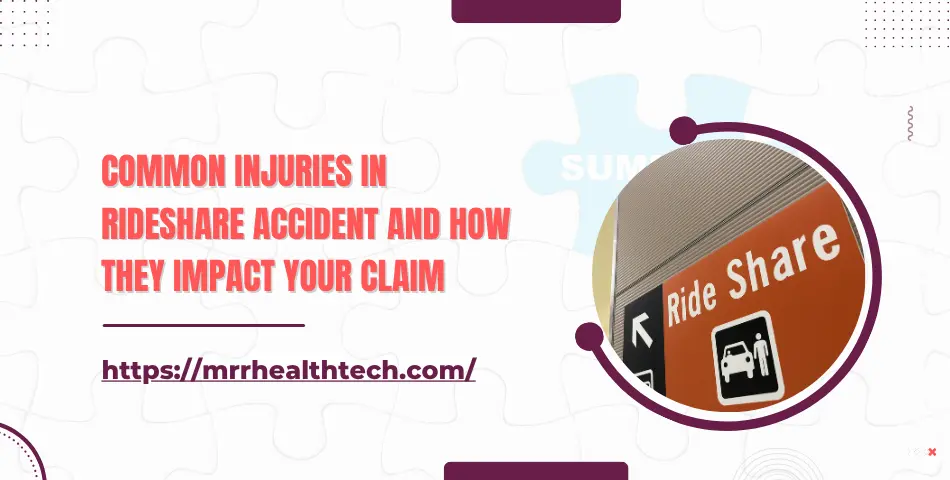
Understanding Rideshare Accidents and Their Complexity
The boom of rideshare platforms like Uber and Lyft has encouraged ease of movement; however, the Uber Safety Report and rideshare accidents statistics indicate an uptick in traffic injuries related to rideshare vehicles, further complicating legal issues.
The spike in the USA, especially in populous states like California and Florida, along with Uber’s ominous safety statistics, confirm incidents of both minor and severe injuries in rideshare accidents are on the rise.
Even though the collisions are the same, rideshare accidents are fundamentally different. Drivers, passengers, rideshare agencies, and even third-party drivers are all potential participants, which makes the legal matters of liability convoluted and the process of claiming an accident considerably harder.
Common Injuries Sustained in Rideshare Accidents
Due to the chaotic nature of accidents and the seatbelt-unbuckling trend of passengers sitting in the back, the risk of sustaining physical injuries in rideshare incidents is high. The following is a non-exhaustive list of the most common injuries that are incurred.
- Whiplash and neck injuries – Caused by sudden stops or rear-end crashes.
- Traumatic Brain Injuries (TBIs) – From head impact during the collision.
- Fractures and broken bones – Particularly common in side-impact collisions.
- Spinal cord injuries – Leading to partial or full paralysis in severe cases.
- Soft tissue injuries – Bruises, sprains, and muscle tears.
- Emotional trauma – Particularly in cases involving assault or fatal crashes.
Uber’s own Trust and Safety Team has expressed growing concern over the increasing reports of Uber assault incidents, as well as physical abuse during rides.
For those asking, “Has an Uber driver ever killed someone?”—the answer sadly is yes. There is a clear deficiency in rideshare safety measures, as well as sobering calls for responsibility and safety measures.
How Injuries Affect Rideshare Accident Claims: A Closer Look at Damages
Your claim is likely to be less valuable for a rideshare accident if the injuries sustained are minor and of a less severe nature. Congress has broadly categorized damages into three headings.
- Economic Damages: Medical bills, lost wages, and rehabilitation costs.
- Non-Economic Damages: Pain, suffering, emotional distress.
- Punitive Damages: Awarded in cases of gross negligence or misconduct.
An illustration of this includes how a person suffering from severe spinal injuries or TBIs would be compensated as compared to someone with minor bruises. Emotional trauma or distress Uber assault victims can have also add complexity in determining the claim value.
Navigating the Complexities of Insurance Coverage in Rideshare Accidents
Uber and other rideshare companies have in place tiered insurance coverage for their drivers, and the driver’s activity status determines the tier.
- App off: Only the driver’s insurance applies.
- No ride: Uber maintains limited liability coverage.
- Ride accepted: Uber’s full commercial coverage is activated (up to $1 million).
This tiered system complicates things. That is the reason why many victims turn to specialists like a Florida rideshare accident lawyer or the best rideshare accident lawyers in Reading, Pennsylvania, to advocate on their behalf for appropriate compensation.
Filing a Rideshare Accident Claim: Key Considerations and Evidence Collection Strategies
If a rideshare accident occurs, the right actions in the early stage can make a big difference:
- Report the incident via the app (example: “How to report Uber drivers” or “How can I report Uber?”).
- Visiting the doctor’s office and preserving all medical documents is crucial.
- Gather all possible evidence: photographs, testimony from witnesses, and even video recordings from dashcams, if available.
- Submit the accident to the police and ask for the rideshare report from Uber.
This evidence is crucial in proving faults and causations, specifically the relationship between your injuries and the accident. Also, remember that if there is inadequate evidence to support the claim, there is a high chance of losing the case.
The Role of Legal Representation in Maximizing Your Rideshare Accident Claim
Navigating through corporate attorneys, insurance adjusters, and varying state laws is often very complicated and time-consuming in rideshare accident cases. In this case, legal counsel is very important as they:
- Guarantee claim accuracy.
- Assist in negotiations and disputes.
- Handles all communication with Uber’s trust and safety division.
- Helps obtain fair results.
An experienced attorney can access Uber’s reports, past accident data, safety trends, and other Uber safety analytics, “How safe is Uber?” This increases the strength of your case.
Timelines for Filing Claims: Understanding State-Specific Deadlines in Rideshare Accidents
All states have a duration of time in which legal action may be taken, defined as the statute of limitations. These varying terms include:
- California: Injury Within 2 years.
- Florida: Most personal injuries were capped at 2 years.
- Pennsylvania: 2 years.
Failing to meet these timeframes may result in permanently losing one’s ability to claim compensation in question. This is a critical window, and legal counsel should be sought as soon as possible, as rideshare accidents with state-specific laws have varying timelines.
Conclusion
With rideshare accidents come physical, emotional, and financial distress. Claiming rights and compensation requires the proper paths be taken and involves the navigation of various injuries, legal timelines, insurance policies, and other factors.
It can be debilitating if you’ve suffered from an injury due to an Uber assault, whiplash, or any spinal injury. There is no need to deal with such an enormous issue alone. Seeking support from a rideshare accident lawyer will make a huge difference.
FAQs
What are the risks of rideshare?
Some of the rideshare risks are the passenger and the driver being involved into a car accident, insurance coverage negligence, driver misconduct such as assault or harassment of any form, as well as under-regulated and no accountability.
Why is it called rideshare?
Rideshare is a name given for a certain form of a transport model where passengers and a driver using a software or an app will “share” a ride. Uber for instance serves as a good example of that. Contrary to stating for taxis, this model is preferable for its automation and the ease that rides are booked.
What happens if Uber gets in an accident?
In the case of being involved with an Uber accident, it is a must to report the issue right away using the app. It is important to note that Uber does offer driver insurance coverage, however, it depends whether the driver is online or offline during the ride. There are potential claims and consulting a lawyer is highly advisable to utilize all the insurance options.
Need Help with a Rideshare Accident Claim?
Get in touch with the accident attorneys who specialize in rideshare accidents. They have the necessary experience and will help you maneuver Uber’s insurance and claim recuperation intricacies. You will be able to focus on your recovery.