Introduction
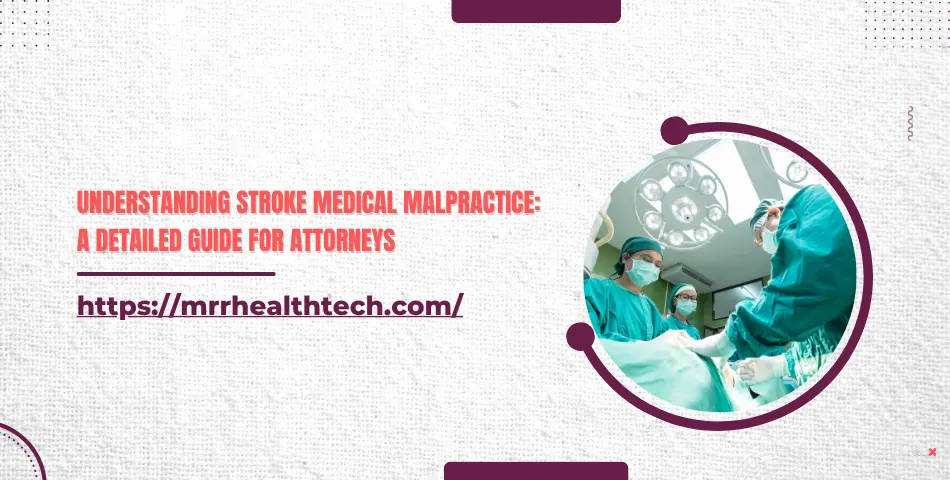
The intricacies of stroke medical malpractice litigations demand an in-depth grasp of medical ethics, the entitlements of patients, and the appropriate legal ecosystem.
As a medical records reviewing company, we serve attorneys based in the United States in these complicated medical legal intersections.
The objective of this article is to equip readers with an all-encompassing perspective on stroke medical malpractice and provide answers to emerging issues, including how our services strengthen legal frameworks and aid claim negotiations.
What is Stroke Medical Malpractice?
Definition and Overview
• Stroke Medical Malpractice is where a healthcare practitioner is supposed to provide the required care and either does not provide the required care, or provides care in a way that does not benefit the patient.
• Some common strokes of malpractice are misdiagnosis, failure to diagnose, and treatment of the wrong medical condition.
Importance of Timely Intervention
• An important facet of the treatment of strokes is ensuring that timely treatment is received, and this is critical in stroke cases as time is the determining factor in brain cell death, and consequently functional capacity.
Critical Aspects of Stroke Medical Malpractice
- Duty of Care: Case law dictates that health care professionals owe a legal obligation of care to practice medicine within established legal thresholds.
- Breach of Duty: A breach of duty occurs when a physician does not abide by the legal thresholds that are set, for example, by failing to identify and manage a stroke or treating a less serious ailment.
- Causation: As the breach of and the injury constituting the harm that had been done to the patient’s health which had deteriorated further.
- Damages: Claimants or victims of the breach must quantify the damages to be recovered, which also involves, but is not limited to, the cost of healthcare, loss of employment, and emotional distress.
Common Types of Stroke Medical Malpractice
Stroke Diagnosis: A less serious health problem is sometimes diagnosed, leading to denial or loss of treatment.
A known symptom of stroke is failing to treat a patient within a certain period of time.
Claiming that no actions were taken towards a patient’s treatment can hinder a patient’s health, leading to the patient suffering from a wide range of health problems.
Current Statistics and Trends (2024)
• The U.S. has roughly 795,000 stroke victims as reported by the Association of American Stroke.
• Surveys conducted recently suggest a significant proportion of patients suffering from stroke are misdiagnosed, somewhere within the range of 15 percent.
Ways Medical Record Review Services Help Lawyers
Role of Medical Records: Medical records play an essential role in building a care chronology and diagnosing a breach in care.
Our Services:
• We conduct detailed examinations of the medical records to find gaps such as omitted diagnoses and treatment lags.
• We prepare expert medical reports deemed admissible in a court of law.
Addressing Common Questions:
What Should Attorneys Investigate in Stroke Cases?
• The most crucial symptoms: The documentation of symptoms and treatment, care, and any associated timelines.
In what ways can the analysis of the medical records help the case?
• Medical records reviewed deeply can prove to be a fundamental piece of evidence in the alleged negligence and cause and effect relationship.
Case Studies:
Case Study 1: Stroke Misdiagnosed
Overview of the case: In an unexplained case of stroke, a 62-year old woman came in with persistent headaches and a spinning sensation of the head.
Challenges: The result of a sluggish start in the treatment process was a devastating stroke .
Solutions: The attorney used the medical records to demonstrate negligence for the delay in treatment.
Case Study 2: Treatment Delay
Overview of the Case: A 45-year-old man experienced stroke symptoms but was not treated for over three hours.
Challenges: the delay caused enduring cognitive damage.
Solutions: the review pointed out the absence prompt support as a case of improper intervention which justifies negligence.
Conclusion
Cases of stroke and medical malpractice involve complex details along with an intricate grasp of medical benchmarks and the standards of the profession.
Attorneys may strengthen their malpractice claims and advocate for the entitlement of their clients with the aid of medical record review services.