Introduction
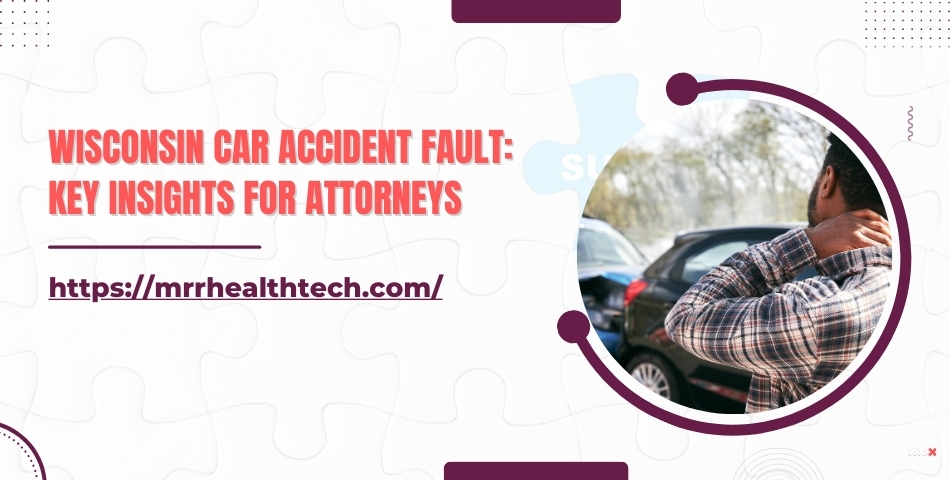
Car accidents can result in buying a legal war, particularly when it comes down to establishing fault for the incidents. In Wisconsin, the legal frame surrounding fault regarding car accidents is taken care of particularly with regards to comparative negligence laws. These are critical for attorneys especially those who have clients that were part of a car accident. This discussion will focus on how fault in a Wisconsin car accident is ascertained, what consequences does comparative negligence accrue, and the implications of medical record review services in assisting in legal cases.
1. Overview of Fault in Wisconsin Car Accidents
Definition of Fault
Terminologically speaking “fault” means the degree of legal culpability for the occurrence of the accident alongside its deleterious effects and. Causative role of fault aids in attributing a legal position or status and hence enabling injury suffers from a wrongful act to be compensated for.
Importance of Determining Fault
Establishing fault is crucial for several reasons:
- It determines the level of damages that can be recovered by the plaintiff.
- It affects the extent of the insurance reimbursements and the amounts that are paid by the insurance companies.
- It could affect the course of subsequent proceedings in a particular case.
2. Wisconsin’s Comparative Negligence Law
Explanation of Comparative Negligence
Wisconsin is one of the states in the United States that operates on modified comparative negligence. This implies that a party may recover damages provided they are less than 51% at fault. However, their damages are diminished by their portion of the blame.
How Fault Percentages Work
For instance, if a plaintiff is determined to be at fault for 30% of an accident with total damages of 100,000 dollars, the plaintiff will only be able to receive 70, 000 dollars as compensation for the case. It is important for all attorneys to understand the concepts of the legal system because they will be able to make sound decisions when advising their clients about their case results.
3. Key Factors Influencing Fault Determination
Gathering Evidence
Determining fault in an accident and consequently gathering evidence is a pivotal step in establishing an individual’s liability and culpability. This can include:
• Accident Police Statements
• Accident Pictures
• Assessments of the damages inflicted on the cars
The Use of Eyewitnesses
Witnesses can be of great help in determining the degree of fault in a case. For instance, attorneys should search for and talk with people who saw the accident happen in order to collect testimony that will confirm their client’s side of the story.
Legal Traffic Restrictions and Laws
Knowledge of the traffic regulations in the concerned area plays an important role in determining who was negligent. Such regulations include running of traffic lights, speeding and other violations which pinpoint who were liable.
4. The Role of Medical Records in Car Accident Cases
Importance of Medical Documentation
Medical records play a crucial role in car accident cases. They provide evidence of injuries sustained in the accident and can help establish a direct link between the accident and the injuries.
How Medical Record Review Services Assist Attorneys
Medical record review services can assist attorneys by:
• Examining medical files for pertinent details.
• Detecting documentation insufficiencies or inconsistencies.
• Offering professional insights into the effects that the injuries have on a customer’s day-to-day activities.
5. Common Challenges in Proving Fault
Disputes over Liability
Matters of car accidents are further made complex with the existence of disagreements as to who is to be blamed. Insurance companies would also try to point fingers instead of coughing up the necessary compensation to their attorneys which is why gathering evidence is a necessity.
Insurance Company Tactics
Be it insurance companies or any other institution, the liability is always reduced in one way or the other. For instance, some do not believe in the accidents being as severe as they are, or they claim they are not at fault. Evidence is necessary at these times together with expert opinions from interviewing.
6. Case Studies
Case Study 1:
Overview: A customer ended up in a rear crash in which the other party alleged that the customer stopped rather abruptly.
Challenges: The insurance company denied liability, and argued that it was the client’s conduct which caused the accident.
Solutions: The attorney gathered supporting documents including video clips from the traffic cameras and statements from witnesses, in order to improve the case by claiming that the other car driver was speeding and left no safe stopping distance.
Case Study 2:
Overview: A customer was injured in a motor vehicle collision with multiple cars, the fault of which was shared by many other parties.
Challenges: Equating each driver’s degree of culpability was difficult witnessed events were conflicting.
Solutions: The attorney made many investigations and acquired police-related documents and expert evaluation of the site of the accident to determine more about the sequence of events.
7. Best Practices for Attorneys Handling Car Accident Cases
Effective Client Communication
Maintaining open lines of communication with clients is essential. Attorneys should regularly update clients on case progress and explain legal concepts in understandable terms.
Strategies for Evidence Gathering
Attorneys should develop a systematic approach to evidence gathering, including:
- Follow up on police reports and collection of witness statements in a timely manner.
- Take pictures of the accident scene during investigations.
- Seek the help of accident reconstruction specialists where necessary.
8. Conclusion
In Wisconsin, car accident fault determination procedures are particularly important for the lawyers dealing with the respective clients as it helps to serve the interest of the client. Taking advantage of the available medical records review services and applying evidence collection instruments in their practice, lawyers can effectively protect the clients’ rights and interests as well as ensure they get the justice they deserve.