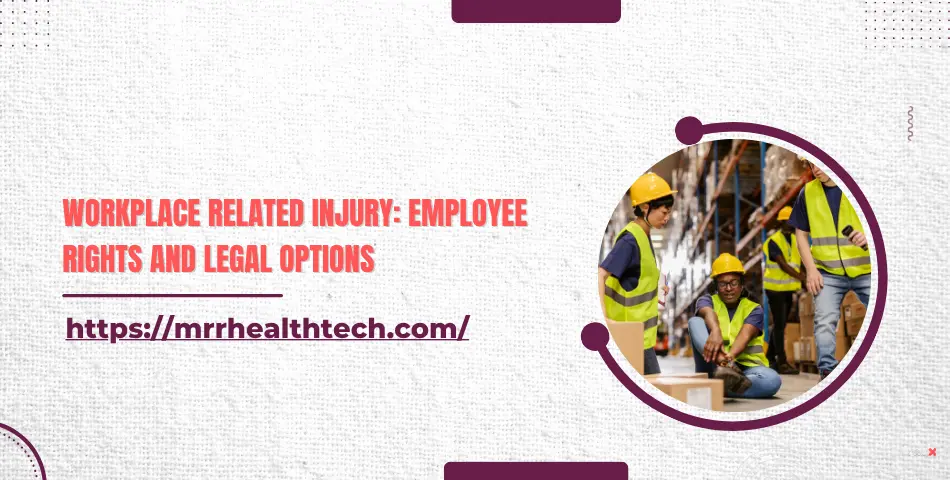
From the moment a Workplace Related Injury occurs, there is a loss of a job, an inability to make a living, and a decline in an employee’s health possibly. The extent of any damage stems from anxiety and mental health issues to slips, falls, and serious injuries. The focus of legal representation is to assist injured employees in issues of disputes, claims, and compensation for work-related injuries, and illnesses.
Having a clear picture of the actions to take and the legal consequences of a Workplace Related Injury is critical in establishing the compensation from the employer and the amount.
Recognizing and Interpreting Injuries
That Occur in a Workplace Having an illness is an example of a shift in any activity either of which is termed a job duty. For instance, an employee may suffer from Musculoskeletal Disorders as a result of exposure to floors of machinery or extreme temperatures.
In work related injuries, one includes falling from a height and being burned, as well as, having an accident with machinery.
In work related injuries, there are the following examples: stress injuries, losses occurring to one’s body due to supersonic machinery, and back injuries due to lifting heavy objects.
Referring to and defining the concept of ‘Occupational Injury’’ from OSHA, any injury is defined qualitatively, if due to work and in the places the work is being done.
On the contrary, a non-work-related injury is like being injured at the time of an engaging in a game of sports during the day which does not count. The fact remains that non work does not mean injury is solely for work; there is also concern as to the level of functioning a restrictive job brings.
Factory Wok Injuries Represented
Clients often seek out attorneys for help with:
The 10 most common workplace injuries – slips, trips, falls, overexertion, contact with objects, burns, etc.
Examples of workplace injuries – falling from a ladder, being stuck in machinery, or being exposed to chemicals.
Musculoskeletal injuries within a workplace – repetitive strain, back pain, and joint issues.
Occupational injuries highlighted in pdf reports for different industries demonstrate problematic injury patterns.
Common workplace injuries – construction, healthcare, and manufacturing are the most OSHA data proven to be high-risk areas for injuries in the workplace.
These patterns help lawyers strengthen their claims when trying to prove that the injuries sustained were a result of the job.
Work Related and Non Work Related Injuries
These are the two types of injuries of most concern:
Work related accidents and other ill health: Automatically covered under workers compensation that is within the scope of job duties.
Examples of non-related work injuries: Injuries sustained during a sporting event, accidents that happen during the course of the day at home, or pre-existing medical conditions that were aggravated in no way because of the work.
Work and non-work-related injury claims: Employers or insurance companies often argue that an injury is not work-related to avoid paying out the claim.
This is a situation in which an attorney tries to prove conclusively that there is a direct link between the two by using examples of workplace injuries, supporting medical records, and advanced legal knowledge.
Legal Rights After an Occupational Injury
Following an Occupational Injury, an employee is entitled to:
- Right to Report: Serious injuries must be reported to OSHA within the first 8 hours after an employee dies on the job.
- Right to Medical Care: Medical care is considered a right after sustaining occupational injuries.
- Right to Compensation: Compensation for lost wages and medical treatment is fundamental.
- Right to Legal Representation: If an employee is denied their claim, they can consult with an attorney.
Despite this, failing to act soon can put their rights at stake.
Actions to Take After an Occupational Injury
There are a few actions that an employee can take in order to protect their health as well as their legal rights.
Report the injury as soon as possible.
Seek medical attention for injuries and be sure to keep records.
Gather and collect evidence that can prove your claim such as photographs and witness statements.
Definitively speak with an attorney if there are delays in receiving the benefits or if it can be proven that the benefits are being denied to you.
Attorneys can assist with falls, equipment injuries, or injuries resulting from chemical exposure to demonstrate a direct link between the job and the injury.
Conclusion
An employee sustaining a workplace injury may feel exposed especially without legal protection. Legal assistance and guidance is indispensable regarding compensation, receiving proper medical assistance and other justice. Lawyers make certain all elementary workplace injuries which involve intricate negotiations regarding taking work or taking injury which is or is not work related is catered for.
FAQs about Workplace Injury
Q1. What is the very first step an individual should undertake after sustaining a workplace injury?
An individual is required to seek medical assistance, report the injury to the employer, and record information as the case unfolds. If there are disputes, seek legal guidance.
Q2. What rights constitutions and laws provide an individual employee who has sustained such an injury?
All employees are entitled to proper medical attention, compensation, and protection against retaliation which legal measures will guarantee.
Q3. Do I need to hire an attorney to make a claim for a workplace injury?
An attorney may not always be necessary but if a claim denial is made, causation is heavily disputed, or compensation is delayed, a lawyer will be helpful and is definitely needed.
👉 If your practice covers Workplace Related Injury claims, our legal and medical consultant team is available to prepare to document evidence and case materials to optimize outcomes for our shared clients.