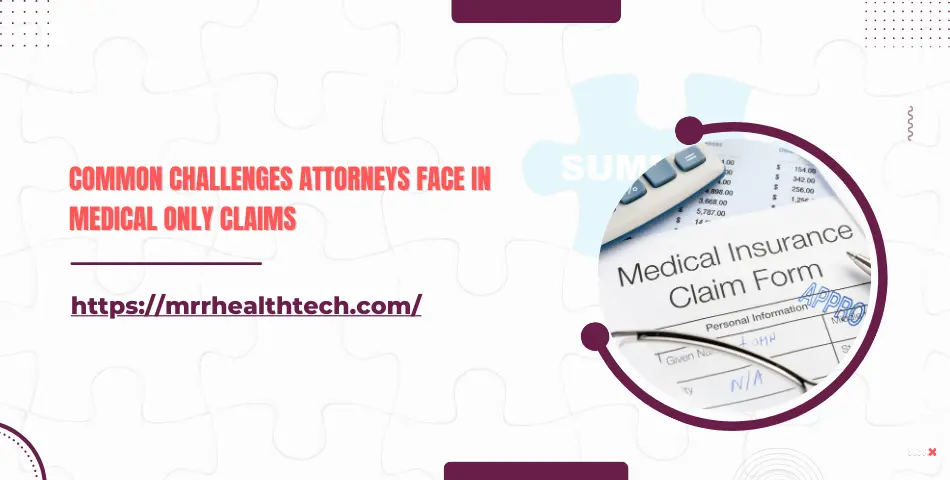
Medical only claims, a type of workers’ compensation claim, may appear simple on the surface. However, attorneys dealing with these claims must overcome difficult challenges. Gaining requisite treatment approval and dealing with the insurance company’s strategies are just a few hurdles out of many that could determine the outcome of a compensation claim. An attorney’s ability to overcome obstacles is crucial in the success of the claim in hand, especially in case of medical only workers compensation claims.
In this blog, we’ll discuss the most common challenges and their approaches to tackle them for better outcomes.
Understanding Medical Only Claims
A medical only workers compensation claim is one in which a worker seeks treatment for a workplace injury and seeks only medical expenses. Unlike indemnity claims which involve a loss of wages or a permanent disability, medical only claims are restricted to treatment and medical care expenses only.
Attorneys dealing with medical only workers comp claims must also know the difference between medical vs indemnity workers’ comp, as with other types of medical only workers comp claims. Only with the right knowledge a compensation claim can be crafted that would guarantee the worker’s entitled medical benefits are provided fully.
Proving Medical Treatment Necessity and Extent
One of the biggest challenges with medical-only claims is the necessity of the treatment and its direct relation to the injury. These claims are usually subjected to thorough scrutiny from insurance companies that are keen on reducing their payouts. Therefore, there is a need to pay great attention to the medical records.
Important Points:
- Defining and capturing medical necessity, medical definition in reports and expert opinions.
- Gathering evidence for the treatment’s scope, such as diagnostic imaging, appropriate consultations, and therapeutic interventions.
- Account for the mechanism of the injury in relation to the treatment that was provided to the patient.
One’s claims for medical treatment is contested, proving the necessity and extent of treatment aids in building robust compensation claims that fortify the client’s medical care coverage.
Dealing with Limited Documentation and Underreporting Injuries
Limited medical records is a common issue for attorneys in workers compensation medical only claim. There are a number of reasons why there could be gaps in records such as injuries being of a lower severity.
Approaches to Address Documentation Gaps:
- Detailed client interviews should be conducted to capture the details of the injuries and their treatment.
- Collect all pertinent medical records such as those from the ER, physical therapy, and consultations with other physicians.
- Accurately capture any underreported injuries as this aids in defending against insurance claims.
Developing a solid medical only workers comp claim starts with understanding how to manage scant documentation.
Navigating Insurance Company Tactics in Medical Only Claims Cases
Insurance companies have different ways to cut down on costs associated with medical only claim. Attorneys have to be able to deal with these strategies.
Common Strategies Include:
- Postponing the granting of approvals for medical services.
- Requesting unnecessary documentation for a written record or a repeat of a medical examination.
- Disputing the medical necessity, medical definition of the treatments.
Noting these strategies allows attorneys to respond proactively resulting in a better outcome for their clients and ensuring the compensation claim will not be unduly stalled or wrongfully contested.
Managing Client Expectations and Coordinating Medical Records
Attorneys have to manage balancing client expectations with the reality of the processes involved. Clients may be hoping for instant approval for treatment or payment which may not be the reality.
Best Used Practices:
- Advise clients to manage expectations aligned with claim processes.
- Disorganized medical records sabotage medical only workers compensation claims.
- Work with the medical personnel to provide the required documentation in a proper format to avoid omissions or inaccuracies.
Managing client relations, expectations alongside proper documentation is the key to successfully different types of claims.
Addressing Treatment and Ensuring Compliance with Statute of Limitations
Medical-only claim have strict deadlines and regulations surrounding the statute of limitations. Attorneys have to make sure that requests for treatment and submissions of filings comply with regulations to the benefit of the client.
Key Points:
- Adhere to the timeline for submission of a medical only workers comp claim.
- Manage ongoing treatment to comply with the requirements of the insurance and the state.
- Resolve all conflicts that may lead to unnecessary delays concerning the compensation claim.
Attorneys can use the client’s interests in workers compensation medical only claims with the strict adherence to deadlines and treatment compliance.
Conclusion
While managing medical-only claims seems straightforward, attorneys encounter a complicated web of paperwork, tactics of the insurance company, and legal frameworks.
With a keen appreciation of these challenges, attorneys can devise tailored strategies to advance a client’s compensation claim and access the medical benefits.
FAQs
What do you mean by medical claims?
Medical claims pertain to submission of applications for payment of benefits for medical services rendered in relation to a certain injury or disease, often associated with a workers’ compensation or a health insurance plan.
How to claim medical claims?
Medical claims can be filed by employees if they notify the employer for the injury sustained, seek appropriate medical care, and provide relevant records to the insurer. Legal representatives may assist in advising on the proper submissions and in maximizing the compensation payable.
Takeaway: Attorneys managing medical only workers compensation must focus on client interactions and legal compliance to strengthen compensation claims.
For specialized assistance with medical-only claims, legal medical records review, and claim management, reach out to our legal support services!